Blue Dream, read closely
Blueberry crossed with Haze, out of Santa Cruz. Sweet berry over pine, usually myrcene first. What the name promises, and where one jar parts ways with the next.
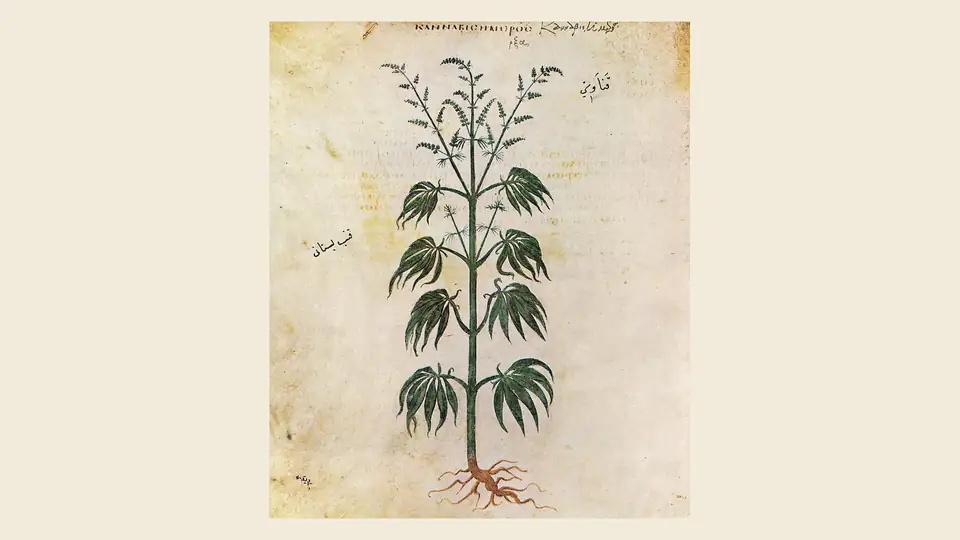
As of October 13, 2026, Blue Dream is listed as a hybrid of DJ Short’s Blueberry and a Haze, traced to Santa Cruz, California. Leafly lists its THC at 21% and AllBud at 17–24%. Its most reported terpenes are myrcene, pinene and caryophyllene, and Leafly reviewers most often report feeling creative, euphoric and happy.
At a glance
| At a glance | Blue Dream |
|---|---|
| Type | Hybrid (Leafly); sativa-dominant hybrid (AllBud) |
| Lineage | Blueberry (DJ Short line) × Haze; the exact Haze is disputed |
| First circulated | Santa Cruz, California, early 2000s, as growers tell it |
| Reported THC | 21% typical (Leafly); 17–24% (AllBud) |
| Commonly reported terpenes | Myrcene, pinene, caryophyllene (Leafly) |
| Commonly reported effects | Creative, euphoric, happy (Leafly user reviews) |
| Nose | Ripe blueberry, sugared herb, a pine edge |
| Our lots | No lab values posted for our Batches yet; the COA is sent on request |
| Total THC | THCA × 0.877 + delta-9 THC |
Type, THC, terpene and effect lines come from Leafly’s Blue Dream entry and AllBud’s Blue Dream entry, read on October 13, 2026. Leafly says its terpene data comes from products tested in labs it certifies, and its effects come from user reviews. These figures describe the strain name, not one lot. They are not test results for our flower.
Where does Blue Dream come from?
The parents are the one part of the story everyone agrees on in outline. The berry side is Blueberry, the line the breeder DJ Short worked up from Thai and Afghan stock in the 1970s and 1980s. The other side is a Haze, the long-flowering sativa family that also sits behind Jack Herer and Super Lemon Haze. Growers in Santa Cruz are credited with putting the two together, and the cut spread through California’s medical gardens in the 2000s before the name went national.
What is not agreed is which Haze. You will see Super Silver Haze named, and you will see “Santa Cruz Haze” and plain “Haze”. No breeder has published a verified pedigree, and Blue Dream has been carried forward mostly as clones rather than as a seed line. That matters later, when we get to why two jars of it can differ.
What does Blue Dream smell like?
Open a well-cured jar and the first thing up is fruit: blueberry, sometimes closer to blueberry jam than to fresh berries. Behind it is a sweet, green herbal note, and at the back a pine-needle sharpness that becomes more obvious when the bud is broken. Ground flower loses some of the sugar and shows more of the pine.
On the palate the berry is quieter than on the nose. Most smokers describe the exhale as sweet and herbal rather than fruity.
What THC percentage does Blue Dream have?
Leafly lists Blue Dream at 21% THC, and AllBud gives 17–24%. Both describe the strain name rather than any one lot, and a single lot can land well above or below them.
A hemp-lane lab report lists THCA and delta-9 THC separately. Total THC is THCA × 0.877 plus delta-9 THC, so a lot at 22% THCA and 0.2% delta-9 THC carries about 19.5% total THC. No lab values are posted for our own Blue Dream Batches yet, so we print no THC figure for them; the COA is sent on request.
What terpenes are in Blue Dream?
Blue Dream is one of the more chemically consistent names in the trade. In the largest peer-reviewed analysis of US dispensary lab data, Smith and colleagues (PLOS ONE, 2022) sorted 89,923 flower samples from six states into three terpene groups. They reported that 88.5% of products sold as “Blue Dream” fell into the group they called “high myrcene-pinene”. Few strain names held together that well.
| Terpene | Where it usually ranks | What it adds to the nose |
|---|---|---|
| Myrcene | First | Ripe fruit, musk, the “jammy” base |
| Alpha- and beta-pinene | Second | Pine needles, the sharp top note |
| Beta-caryophyllene | Third | Black pepper, warmth on the exhale |
| Limonene, ocimene, terpinolene | Supporting | Sweet citrus and green herb |
These ranks describe how Blue Dream is commonly reported, not a reading of one Batch, and a single certificate of analysis (COA) can differ.
What effects do people report from Blue Dream?
In dispensary reviews and strain-database comments, the words that recur for Blue Dream are “clear”, “upbeat”, “creative” and “easygoing”. Many describe a quick lift in mood and focus that settles, over an hour or so, into a looser body feel without much weight. It has a reputation as a daytime strain that people return to rather than a novelty. On Leafly, the effects reviewers report most often are creative, euphoric and happy; AllBud lists creative, euphoria and happy. AllBud also lists medical conditions. We leave those out, because user reviews are not evidence that a strain treats anything.
Those are reports, not measurements. They are shaped by dose, tolerance, setting and expectation, and the name on the jar shapes expectation more than most people admit. This is not medical advice, and nothing here has been evaluated by the FDA.
Why does one jar of Blue Dream differ from the next?
The 88.5% figure is good news, but it also means about one product in nine sold as Blue Dream tests like something else. Five things account for most of the spread.
- The cut. Blue Dream moves mostly as clones, and old clone lines pick up mislabels as they pass from garden to garden. A 2019 genetic study, Schwabe and McGlaughlin (Journal of Cannabis Research), found that samples sold under one strain name were often genetically inconsistent across dispensaries.
- Seed versions. Several seed companies sell “Blue Dream” made by crossing back to the clone. Seed plants vary, and some phenotypes lean far more to the Haze side, with less fruit and more spice.
- Grow and harvest. Blue Dream is a big, high-yielding plant, and that makes it tempting to grow fast. Light-dep and greenhouse lots harvested early often read thinner on terpenes than slow indoor lots.
- Dry and cure. Myrcene and pinene are light monoterpenes that leave first. Ross and ElSohly (Journal of Natural Products, 1996) measured how drying shifts cannabis oil away from those lighter compounds. A rushed dry costs Blue Dream its berry before anything else.
- Time in the bag. A pound opened weekly for three months does not smell in month three as it did on day one. Storage matters more for a fruit-forward strain than for a fuel-forward one.
How do you read a Blue Dream COA?
Look for three things on the lab report before you trust the name.
- The terpene panel exists. Many hemp COAs test cannabinoids only. Without a terpene panel you cannot check any of the above.
- Myrcene leads and pinene shows up. If caryophyllene and limonene lead instead, you may be holding a different cut, or a different strain.
- The total THC line is computed correctly. Total THC is THCA × 0.877 plus delta-9 THC. A lot listed at 20% THCA and 0.2% delta-9 carries about 17.7% total THC.
What does December 11 change for Blue Dream THCA flower?
OCTOBER 3, 2026 — Blue Dream reaches buyers by two routes. In the hemp-retail lane it is sold as THCA flower that tested at or under 0.3% delta-9 THC before heating, under the hemp definition in 7 U.S.C. §1639o. In the licensed-dispensary lane, in states with adult-use cannabis, the same cultivar is sold as marijuana under a state license. Congress has changed the first lane: the federal definition moves to a total-THC test, counting THCA, of 0.3% by dry weight. H.R. 6500, signed September 2, 2026, set that change for naturally occurring cannabinoids at December 11, 2026 (CRS In Focus IF13136 explains the definition). From that date a Blue Dream lot at 20% THCA no longer counts as hemp under federal law, unless Congress acts again. The dispensary lane is unaffected by this change. State hemp rules also differ, so check your own state’s law before you order.
Filed by the desk. Not legal advice.
Sources
- Leafly, “Blue Dream” strain entry, read October 13, 2026. leafly.com
- AllBud, “Blue Dream” strain entry, read October 13, 2026. allbud.com
- Smith, Vergara, Keegan and Jikomes, “The phytochemical diversity of commercial Cannabis in the United States,” PLOS ONE, May 19, 2022. doi.org/10.1371/journal.pone.0267498
- Schwabe and McGlaughlin, “Genetic tools weed out misconceptions of strain reliability in Cannabis sativa,” Journal of Cannabis Research, 2019. doi.org/10.1186/s42238-019-0001-1
- Ross and ElSohly, “The volatile oil composition of fresh and air-dried buds of Cannabis sativa,” Journal of Natural Products, 1996. doi.org/10.1021/np960004a
- 7 U.S.C. §1639o, definition of hemp. govinfo.gov
- H.R. 6500, 119th Congress. congress.gov
- Congressional Research Service, In Focus IF13136, August 17, 2026. everycrsreport.com
How we wrote this: type, THC figures, leading terpene names and top effects in the At a glance table from Leafly and AllBud; lineage from published breeder and grower accounts, flagged where they disagree; terpene ranks from the cited study and published lab menus; effects summarized from public user reports. Last reviewed October 13, 2026.
The federal hemp rule · December 11, 2026On December 11, 2026 the federal definition of hemp starts counting THCA toward the 0.3% total-THC limit, and flower like most of this shelf will no longer qualify. Until then it is sold as hemp, and this note will be rewritten the day the rule takes effect.Filed by the desk.
Questions
What THC percentage does Blue Dream have?
Leafly lists Blue Dream at 21% THC and AllBud gives 17–24%. These are figures for the strain name, not test results for any one lot. On hemp-lane flower, total THC is THCA × 0.877 plus delta-9 THC.
What is Blue Dream a cross of?
Blue Dream is usually described as DJ Short's Blueberry crossed with a Haze, and it is traced to Santa Cruz, California. Which Haze was used has never been settled in print.
What terpenes are in Blue Dream?
Most lab reports put myrcene first, with pinene and caryophyllene behind it. A 2022 study of 89,923 US lab samples placed 88.5% of Blue Dream products in its high myrcene-pinene group.
Is Blue Dream THCA flower the same plant as dispensary Blue Dream?
It can be the same cultivar. The difference is the lane it is sold in: hemp-lane THCA flower must test at or under 0.3% delta-9 THC before heating, while dispensary flower is sold as marijuana under a state license.
Is Blue Dream an indica or a sativa?
Leafly lists it as a hybrid and AllBud as a sativa-dominant hybrid. Its chemistry sits in the myrcene-pinene group, and the 2022 PLOS ONE study found that indica, hybrid and sativa labels in that group were spread no differently from the market as a whole, which is one reason those labels are a poor guide.
What effects do people report from Blue Dream?
Leafly reviewers most often report feeling creative, euphoric and happy, and AllBud lists creative, euphoria and happy. These are user reports, shaped by dose, tolerance and setting, not measurements or medical claims.
How we wrote this. Set down by THCA Life editorial desk for THCA Life. Every change is dated above. Corrections are welcome at hello@thcalife.com.