Trainwreck, a Humboldt classic
A Northern California hybrid from the Arcata area, built from Mexican and Thai sativas and an Afghani. Pine, lemon and pepper, and two stories about the name.
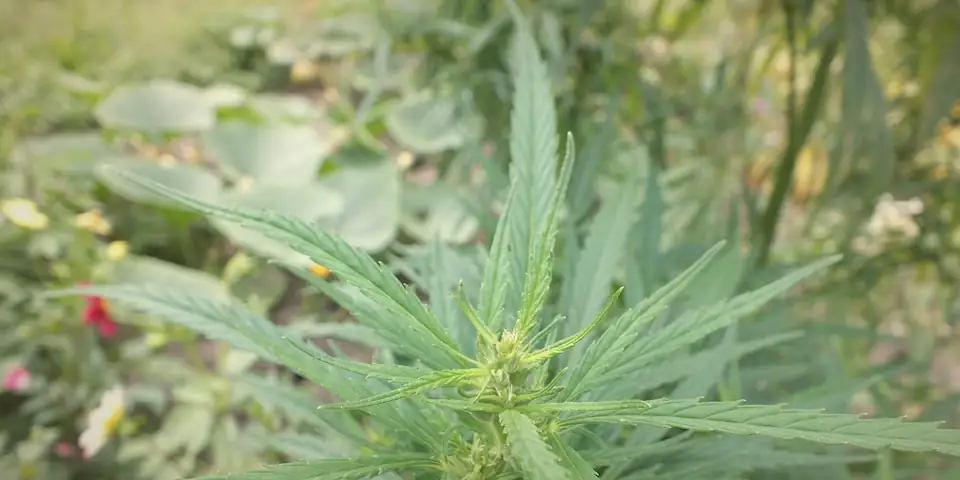
Trainwreck is a sativa-leaning hybrid from the Arcata area of Humboldt County, California, bred from Mexican and Thai sativas crossed with an Afghani indica. It smells of pine, lemon and pepper, and lab reports commonly lead with terpinolene, then myrcene and pinene, as of October 3, 2026. It has been a Northern California staple since at least the 1990s.
| Specimen label | Trainwreck |
|---|---|
| Lineage | Mexican and Thai sativas × Afghani indica (Leafly) |
| Origin | Arcata, Humboldt County, California |
| Sold as | Sativa-leaning hybrid; AllBud lists 80% sativa, 20% indica |
| Nose | Pine, sweet lemon, pepper, wood |
| Lead terpenes, as commonly reported | Terpinolene, then myrcene and pinene |
| Flowering, per Leafly | About 8 weeks indoors |
| Total THC | THCA × 0.877 + delta-9 THC |
Humboldt, and a name with two stories
Trainwreck belongs to the Emerald Triangle era before cannabis cups and clone brands, so its history is passed down rather than written down. The pedigree the databases give is broad. Leafly says “Mexican and Thai sativas were bred with Afghani indicas,” and AllBud lists “2 sativas (Mexican and Thai) and one indica (Afghani).” No breeder record names the exact plants. A pair of Arcata growers, sometimes called the Trichome Brothers, are commonly credited in grower lore, but that credit is not documented.
The name has two explanations:
- The wreck. Growers near Arcata are said to have rescued the plants from a garden next to a train derailment. It is the better story, and the less verifiable one.
- The plant, or the hit. Leafly notes that some trace the name to the plant’s sprawling growth; AllBud’s description says it hits “like a train after just a couple of hits.”
Neither is provable. What is clear is that the strain was a Northern California fixture long enough to become one of the region’s reference sativas.
The nose
Trainwreck smells sharp and clean. The first impression is pine resin and sweet lemon, close to a lemon-pine cleaner, then pepper and a little wood when you break a bud. There is an herbal brightness on top that is typical of terpinolene strains. The smoke is spicy and dry, and AllBud notes “a noticeable after taste of lemon.” Poorly stored Trainwreck loses the lemon first and turns flat and woody.
The terpene profile, as commonly reported
| Terpene | Where it usually ranks | Approximate band on lab reports | What it adds |
|---|---|---|---|
| Terpinolene | First | About 2–6 mg/g | Pine, herbs, a floral-citrus lift |
| Myrcene | Second | About 1–3 mg/g | Earthy body |
| Pinene | Third | About 0.5–2 mg/g | Fresh pine, dry edge |
| Caryophyllene, limonene, ocimene | Supporting | Usually under 1.5 mg/g each | Pepper, lemon, sweet green notes |
These bands are approximate, based on how Trainwreck commonly reads on published lab menus, not on one Batch. Terpinolene-led flower is the minority in the US market. In Smith and colleagues (PLOS ONE, 2022), a study of 89,923 US lab samples, 87.4% of the THC-dominant samples fell into the caryophyllene-limonene or myrcene-pinene groups, which leaves the terpinolene-myrcene group at 12.6%, roughly one sample in eight. Trainwreck sits in that smaller group with Jack Herer and Durban Poison, which is a large part of why it reads so differently from the dessert and gas strains that fill most menus.
What people report feeling
On Leafly, reviewers most often describe Trainwreck as euphoric, uplifted and creative, and the page calls it energizing rather than calming. Many keep it for daytime. The most common complaints there are dry mouth, dry eyes and dizziness, and some individual reviews mention feeling anxious at higher doses.
These are user reports, not measured effects. Dose, tolerance and setting shape them. Not medical advice; not evaluated by the FDA.
Grow and phenotype notes
Leafly describes Trainwreck as a vigorous plant that responds well to topping, feeds medium to heavy and tends to finish early outdoors, with yields of roughly 450–550 g/m² and an indoor flower of about 8 weeks. That fast finish is unusual for a sativa-leaning plant and probably comes from the Afghani side. Phenotypes split between a tall, spicy, lemon-pine type and a stockier, earthier one. Long stretch and loose structure are normal, which may be where the “wreck” in the name came from.
Trainwreck as THCA flower: what to check on a COA
- Terpinolene at or near the top. If the panel is led by myrcene with no terpinolene to speak of, the cut, the cure or the label is in question.
- Freshness. Terpinolene is volatile and drops with heat and time. Ask for the test date and compare it to the harvest.
- Look-alike names. “Trainwreck” appears in many crosses. Check that the full name on the COA matches the label.
- The total THC sum. A lot at 18% THCA and 0.24% delta-9 THC carries about 16.0% total THC (18 × 0.877 = 15.79, plus 0.24).
Similar strains on these pages
- Jack Herer: terpinolene first, with more spice and pine.
- Durban Poison: terpinolene with sweet anise, a landrace sativa.
- Sour Diesel: another daytime classic, fuel where Trainwreck has lemon-pine.
Where Trainwreck stands after December 11
OCTOBER 3, 2026 — Trainwreck sold as THCA flower in the hemp-retail lane counts as hemp federally today only if it tests at or under 0.3% delta-9 THC, because the test in 7 U.S.C. §1639o measures delta-9 THC alone. Under P.L. 119-37, on December 11, 2026, the date H.R. 6500 (signed September 2, 2026) set for natural cannabinoids, the federal hemp definition becomes 0.3% total THC by dry weight, THCA included (CRS In Focus IF13136). The example lot above, around 16% total THC, would be more than fifty times that limit. California, where Trainwreck was born, already bars hemp flower from retail sale; there and in other adult-use states the strain is sold through licensed dispensaries as marijuana. Several other states also keep high-THCA flower out of hemp retail.
Filed by the desk. Not legal advice.
Sources
- Leafly, Trainwreck strain page (accessed October 3, 2026). leafly.com
- AllBud, Trainwreck strain page (accessed October 3, 2026). allbud.com
- Smith and others, “The phytochemical diversity of commercial Cannabis in the United States,” PLOS ONE, 2022. doi.org/10.1371/journal.pone.0267498
- 7 U.S.C. §1639o. law.cornell.edu
- H.R. 6500, 119th Congress. congress.gov
- Congressional Research Service, In Focus IF13136, August 17, 2026. everycrsreport.com
How we wrote this: lineage and naming stories from the cited strain databases and commonly repeated grower accounts, labelled as such; terpene ranks from the cited study and published lab menus; effects summarized from public user reports. Last reviewed October 3, 2026.
The federal hemp rule · December 11, 2026On December 11, 2026 the federal definition of hemp starts counting THCA toward the 0.3% total-THC limit, and flower like most of this shelf will no longer qualify. Until then it is sold as hemp, and this note will be rewritten the day the rule takes effect.Filed by the desk.
Questions
What is Trainwreck a cross of?
Mexican and Thai sativas crossed with an Afghani indica, according to Leafly and AllBud. It is associated with Northern California, around Arcata in Humboldt County.
Why is it called Trainwreck?
Two stories are told. One says growers near Arcata grabbed the plants from a garden beside a train wreck. The other says the name describes the plant's sprawling growth or how hard it hits. Neither is documented.
What terpenes are in Trainwreck?
Lab reports commonly put terpinolene first, with myrcene and pinene behind it. That puts it in the same uncommon terpinolene-led group as Jack Herer and Durban Poison.
Is Trainwreck a sativa?
It is a sativa-leaning hybrid. AllBud lists it as 80% sativa and 20% indica.
How we wrote this. Set down by THCA Life editorial desk for THCA Life. Every change is dated above. Corrections are welcome at hello@thcalife.com.