Pineapple Express, past the movie
A film title that became a real strain. Trainwreck crossed with Hawaiian: canned pineapple, cedar and a bright, sativa-leaning lift.
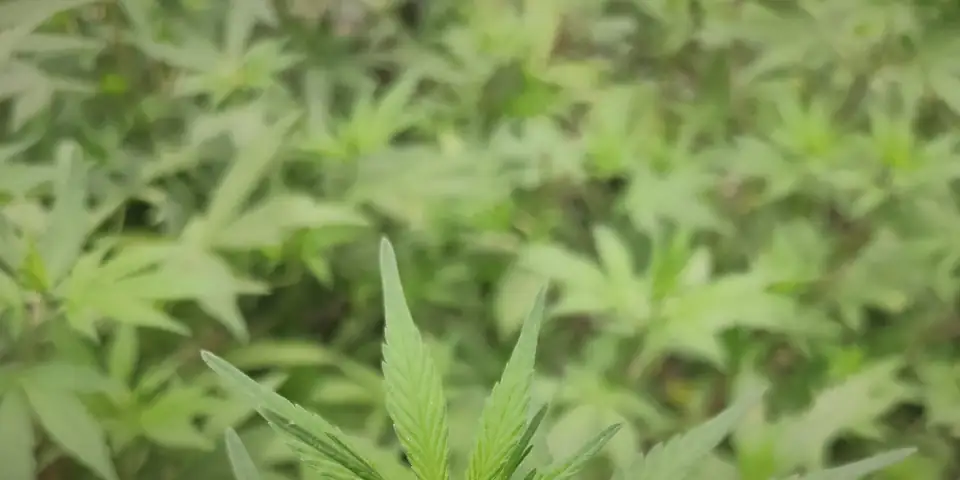
Pineapple Express is a sativa-leaning hybrid of Trainwreck and Hawaiian that took its name from the 2008 film. It smells of canned pineapple over cedar and pine. Lab reports commonly put myrcene, beta-caryophyllene and pinene at the top, and hemp-lane THCA listings often run in the high teens to low 20s, as of October 3, 2026.
| Specimen label | Pineapple Express |
|---|---|
| Lineage | Trainwreck × Hawaiian |
| Name | From the 2008 film Pineapple Express; plants carried the name soon after |
| Also called | PEX |
| Sold as | Sativa-leaning hybrid |
| Nose | Canned pineapple, mango, cedar, fresh pine |
| Lead terpenes, as commonly reported | Myrcene, caryophyllene, pinene (limonene or ocimene in some lots) |
| THCA, as commonly listed for hemp-lane flower | High teens to low 20s |
The movie came first
Most strains get a name and then a reputation. Pineapple Express went the other way. The 2008 stoner comedy invented a rare, nearly untraceable strain as its plot device, and the name was better than anything a breeder had used. Soon after the film’s release, plants and seed lines carrying the name appeared on the market. Leafly’s entry describes it as a real strain that “rose to fame on the silver screen in 2008”.
That history matters for buyers. Because the name came before any single plant, more than one breeder’s line has been sold as Pineapple Express. Seed lines released under the name, G13 Labs’ among the best known, are crosses with their own variation. The name tells you a style, not a clone.
Lineage
The pedigree most records give is Trainwreck × Hawaiian. Trainwreck is a Northern California hybrid known for a sharp, peppery and piney nose and a fast, racy onset. Hawaiian lines bring tropical fruit and a lighter, sunnier character. The cross reads like both: tropical on top, wood and pepper underneath.
Neither parent is fully documented. Trainwreck’s own background is told as Mexican and Thai sativas with an Afghani, and “Hawaiian” covers several island lines. Treat the pedigree as the family resemblance it is.
The nose
Pineapple Express is one of the few strains whose name is a fair description. A good jar opens on sweet pineapple, closer to canned fruit than fresh, with mango behind it. Underneath sits cedar and fresh pine, and grinding brings out pepper. The smoke is light and sweet, with a woody, slightly sharp finish. In lots that have lost their top notes, the pineapple goes first and the cedar stays.
Buds are typically medium-dense, light green and spade-shaped, with orange pistils and a moderate coat of trichomes. It is less frosty than dessert strains, which is a style, not a flaw.
Terpene profile, as commonly reported
| Terpene | Where it usually ranks | What it adds |
|---|---|---|
| Myrcene | First to second | Ripe fruit, musk |
| Beta-caryophyllene | First to third | Pepper, warm wood |
| Pinene | Second to fourth | Fresh pine, sharpness |
| Limonene, ocimene | Supporting | Citrus, sweet green |
These ranks come from public strain entries and published lab menus, not one Batch. The pineapple itself is not a single terpene on the panel. Oswald and colleagues (ACS Omega, 2023) found that minor, non-terpene compounds, which a standard COA does not test, track strongly with the sweet and unusual aromas that set one cultivar apart from another. Variation between lots is also expected: Smith and colleagues (PLOS ONE, 2022) found across 89,923 US lab samples that commercial strain labels “do not consistently align” with chemistry.
What people report feeling
Public reviews most often use “happy”, “uplifted”, “energetic” and “euphoric”. Readers commonly describe a quick, bright mood lift with a clear head, and many place it in the daytime or around company. Some report a racy edge at a higher dose, which would fit the Trainwreck side.
These are user reports, not measurements, and they shift with dose, tolerance and setting. Not medical advice; not evaluated by the FDA.
Grow notes
Growers commonly give Pineapple Express a flowering time of about 7 to 9 weeks indoors and describe it as vigorous and forgiving, with good yields and decent mold resistance outdoors. It can stretch in early flower, a sativa-side trait. Seed lines differ, so phenotype selection matters.
Reading a Pineapple Express COA
- Ask whose line it is. With several breeders’ versions in circulation, the source matters more than usual.
- Look for myrcene with pinene in the top four. A lot led by limonene alone may be a different style sold under a popular name.
- Work out total THC. A lot at 19.6% THCA and 0.24% delta-9 THC carries about 17.4% total THC (19.6 × 0.877 = 17.19, plus 0.24).
- Check the test date. The pineapple top is the first note to fade.
Our guide to reading a lab report covers each line.
Similar strains on these pages
- Jack Herer, another bright, piney daytime classic.
- Durban Poison, for a lift with anise instead of fruit.
- Blue Dream, a sweeter, berry-led hybrid with a similar daytime reputation.
The law, as of October 3, 2026
OCTOBER 3, 2026 — Pineapple Express sold as hemp depends on the federal definition in 7 U.S.C. §1639o, which today limits only delta-9 THC, at 0.3% by dry weight. P.L. 119-37 changes that to a total-THC limit including THCA (CRS In Focus IF13136). Under H.R. 6500, signed September 2, 2026, the change reaches flower on December 11, 2026. Even a lower-testing Pineapple Express lot, at well over 0.3% total THC, would then be federally marijuana unless Congress intervenes. Dispensaries licensed in adult-use states operate under state cannabis law. Several states already prohibit THCA flower in hemp retail.
Filed by the desk. Not legal advice.
Sources
- Leafly, “Pineapple Express” strain entry. leafly.com
- Oswald and others, “Minor, nonterpenoid volatile compounds drive the aroma differences of exotic Cannabis,” ACS Omega, 2023. doi.org/10.1021/acsomega.3c04496
- Smith and others, “The phytochemical diversity of commercial Cannabis in the United States,” PLOS ONE, 2022. doi.org/10.1371/journal.pone.0267498
- 7 U.S.C. §1639o. govinfo.gov
- Congressional Research Service, In Focus IF13136, August 17, 2026. everycrsreport.com
- H.R. 6500, 119th Congress. congress.gov
How we wrote this: name history and lineage from public strain records, with undocumented parentage marked; terpene ranks from published lab menus and the cited studies; effects summarized from public user reports. Last reviewed October 3, 2026.
The federal hemp rule · December 11, 2026On December 11, 2026 the federal definition of hemp starts counting THCA toward the 0.3% total-THC limit, and flower like most of this shelf will no longer qualify. Until then it is sold as hemp, and this note will be rewritten the day the rule takes effect.Filed by the desk.
Questions
Is Pineapple Express a real strain?
Yes. The 2008 film's strain was fiction, but the name was soon attached to real plants, most often a Trainwreck × Hawaiian cross, and it has been sold under that name since.
What is Pineapple Express a cross of?
Trainwreck crossed with Hawaiian is the pedigree most records give. Seed lines from different breeders are sold under the name, so plants vary.
What terpenes are in Pineapple Express?
Lab reports commonly show myrcene, beta-caryophyllene and pinene near the top, with limonene or ocimene in some lots.
Is Pineapple Express a sativa?
It is usually sold as a sativa-leaning hybrid. Indica and sativa labels are loose, and the terpene panel says more about a lot than the label does.
How we wrote this. Set down by THCA Life editorial desk for THCA Life. Every change is dated above. Corrections are welcome at hello@thcalife.com.