Does THCA get you high? What heat changes
The short answer is yes, once it is lit. The longer answer is about what a flame, a vaporizer or an oven does to the bud, and how each one feels.
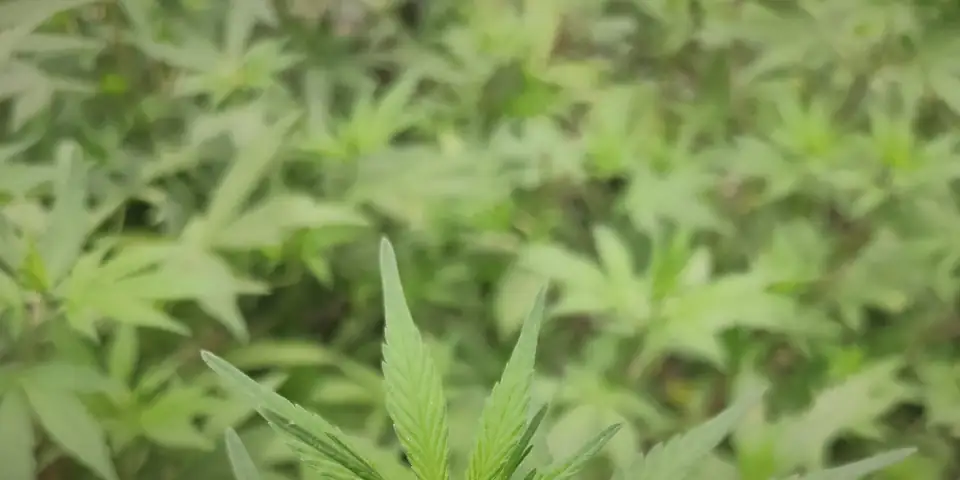
Raw THCA, as it sits in the bud, does not produce the familiar cannabis high. Heat turns it into delta-9 THC, which does, so smoked, vaped or baked THCA flower is felt much like dispensary flower of similar strength. One 2017 lab study found THC bound to the brain’s main cannabinoid receptor about 62 times more strongly than THCA. This reflects the research as of October 3, 2026.
The short version
THCA is the form the plant actually makes. It is an acid, and the acid barely fits the receptor in the brain that produces a cannabis high. Heat knocks a small piece off the molecule (chemists call this decarboxylation) and leaves THC behind. A lighter flame, a vaporizer’s heating chamber and a low oven all do it, at different speeds and with different results.
So the useful question is not whether THCA gets you high. It is what you are about to do to it.
Why raw THCA mostly doesn’t register
The clearest evidence comes from a receptor study by McPartland and colleagues (Cannabis and Cannabinoid Research, 2017). They measured how strongly THCA and THC bind to CB1, the receptor most associated with the cannabis high. THC bound about 62 times more strongly. Their purified THCA standard already contained 2% THC, and the authors suspected even that small binding was partly THC in disguise. They concluded that THCA has little affinity or effect at that receptor.
That does not mean a raw bud is THC-free. Hemp-lane flower can legally contain a small amount of delta-9 THC, and some THCA converts slowly during drying, curing and storage. Eating raw flower is a poor way to feel anything, but “nothing at all” overstates it.
What heat changes, route by route
| Route | What happens to THCA | When it is usually felt | How people describe it |
|---|---|---|---|
| Joint, pipe or bong | The flame converts most of it to THC in an instant; some is burned or lost in side smoke | Within seconds to minutes | Quick to arrive, easy to stop after a puff or two |
| Flower vaporizer | Hot air converts it without burning the plant | Within seconds to minutes | Similar to smoking; many say the terpenes taste clearer |
| Edibles from oven-heated flower | Converted in the oven first, then eaten | 30 minutes to 2 hours | Slower, longer, often called heavier and more physical |
| Raw flower in food or juice | Little conversion | Little or nothing | Mostly unremarkable |
The timings are Health Canada’s descriptions of how cannabis effects begin, which also notes that some effects can last up to 24 hours. The oven step matters more than people expect. Wang and colleagues (Cannabis and Cannabinoid Research, 2016) mapped how quickly THCA converts across temperatures and times. Conversion is slow at low heat and quick at higher heat, which is why butter or oil made from unheated flower tends to disappoint.
What it feels like once heated
Once THCA becomes THC, it behaves like THC. Health Canada lists the usual short-term effects as euphoria, a sense of well-being, relaxation and heightened senses of sight, taste, smell and sound. It lists the unwelcome ones too: confusion, sleepiness, poorer memory and reaction time, and anxiety, fear or panic.
Within that range, the strain matters. Public reviews describe myrcene-heavy flower such as Granddaddy Purple as slow and body-heavy, and terpinolene-led flower such as Jack Herer as bright and busy. Those links are reported impressions, not settled science; our guide to myrcene walks through what has and has not been tested. Dose, tolerance, sleep, food and the room you are in do as much as the strain.
None of this is medical advice, and none of it has been evaluated by the FDA.
Is THCA flower weaker than dispensary weed?
Not by definition. After heat, a THCA bud and a dispensary bud deliver the same molecule. What differs is the label. Hemp-lane flower is sold on its pre-heat delta-9 number, dispensary flower on its total THC, and a jar can look mild on one line and strong on the other. For the purpose of this page, read the total THC line on the lab report, not the delta-9 line, when you want to know how strong it will feel.
Three things people get wrong
- “It’s a lighter, legal high.” The legal status is about the plant before heat. The high after heat is ordinary THC.
- “Hemp won’t fail a drug test.” Standard tests look for THC’s breakdown products. Smoked or vaped THCA flower produces them.
- “It’s fine to drive after a little.” Health Canada lists slower reaction time and poorer attention among the effects. Plan the evening so you do not have to.
Going slowly
Because inhaled cannabis arrives within minutes, it is easy to pace: a small amount, then a pause before deciding on more. Edibles are the opposite. The slow start tempts people to take a second helping before the first has arrived, and the two then land together. If you are new to flower, or new to a stronger lot, treat the first session as a test of the lot, not of yourself.
OCTOBER 3, 2026 — Whether you can buy THCA flower at all depends on your state, and the federal definition of hemp changes on December 11, 2026. Not legal advice.
Sources
- McPartland and others, “Affinity and Efficacy Studies of Tetrahydrocannabinolic Acid A at Cannabinoid Receptor Types One and Two,” Cannabis and Cannabinoid Research, 2017. doi.org/10.1089/can.2016.0032
- Wang and others, “Decarboxylation Study of Acidic Cannabinoids,” Cannabis and Cannabinoid Research, 2016. doi.org/10.1089/can.2016.0020
- Health Canada, “Health effects of cannabis.” canada.ca
How we wrote this: pharmacology from the cited laboratory studies; onset times and short-term effects from Health Canada; strain impressions summarized from public user reports. Last reviewed October 3, 2026.
The federal hemp rule · December 11, 2026On December 11, 2026 the federal definition of hemp starts counting THCA toward the 0.3% total-THC limit, and flower like most of this shelf will no longer qualify. Until then it is sold as hemp, and this note will be rewritten the day the rule takes effect.Filed by the desk.
Questions
Can you get high from raw THCA flower?
Not in the usual way. THCA binds only weakly to the brain's main cannabinoid receptor, so raw flower in a smoothie mostly does not produce a high. Raw flower does carry small amounts of THC already, so it is not entirely inert.
Does smoked THCA flower feel different from dispensary weed?
Not by its nature. Heat turns THCA into the same delta-9 THC found in dispensary flower. Differences people notice come from strength, terpenes, freshness, dose and setting, not from the hemp label.
How fast does smoked or vaped THCA flower kick in?
Health Canada describes inhaled cannabis as felt within seconds to minutes. Edibles made from heated flower take 30 minutes to 2 hours to begin.
Will THCA flower show up on a drug test?
It can. Smoking or vaping it produces THC in the body, and standard drug tests look for THC's breakdown products, not for the word hemp.
How we wrote this. Set down by THCA Life editorial desk for THCA Life. Every change is dated above. Corrections are welcome at hello@thcalife.com.