Terpenes in THCA flower, explained
THCA has almost no smell of its own. Everything you notice when a jar opens comes from terpenes and a few trace compounds. Here is how to read them.
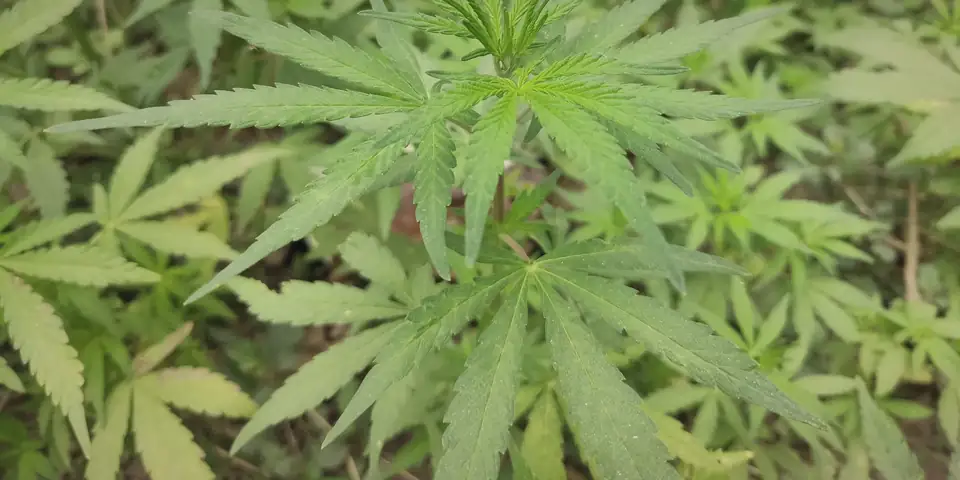
Terpenes are the volatile aromatic compounds that give THCA flower its smell and much of its flavor; THCA itself has almost none. Well-cured flower usually carries 1–3% terpenes by weight (10–30 mg/g), led by one or two compounds such as myrcene, caryophyllene, limonene or terpinolene. This guide is current as of October 3, 2026.
What a terpene is
Terpenes are a large family of plant compounds built from repeating five-carbon units. Cannabis makes most of its terpenes in the glandular trichomes, the small resin heads on the flower, which is also where it makes THCA. That shared factory is why frosty flower and fragrant flower tend to go together, though not always.
Two sizes matter for flower:
- Monoterpenes (10 carbons), such as myrcene, limonene, pinene, terpinolene, ocimene and linalool. They are light and volatile. They carry the top notes you smell first, and they are the first to leave during drying and storage.
- Sesquiterpenes (15 carbons), such as beta-caryophyllene and humulene. They are heavier and hold on longer. They carry the pepper and wood that remain in old flower.
The plant builds these with enzymes called terpene synthases. Cannabis has a sizeable family of them, and a single enzyme can make more than one product, which is why certain terpenes tend to appear together. Booth and Bohlmann (Plant Science, 2019) review how this works, from genome to flower.
A strain’s smell is not terpenes alone. In 2021, chemists identified trace sulfur compounds in cannabis that are responsible for its skunky, gassy notes (Oswald and colleagues, ACS Omega). They occur at tiny concentrations and are not on standard lab reports.
How labs measure terpenes
A certificate of analysis (COA) with a terpene panel lists each compound the lab tested, usually by gas chromatography, with a result and a limit of quantitation (LOQ).
| You will see | What it means |
|---|---|
| mg/g | Milligrams of the terpene per gram of flower. 10 mg/g = 1% |
| % (w/w) | Percent by weight. Same number divided by 10 |
| Total terpenes | The sum of all terpenes the lab measured. It only covers the compounds on that lab’s panel |
| ND or < LOQ | Not detected, or below the smallest amount the lab can measure reliably. It does not mean zero |
| Panel size | Often 15–40 compounds. Two labs with different panels can report different totals for the same flower |
Three practical rules follow. First, compare lead terpenes, not just totals, because the total depends on the panel. Second, compare within one lab where possible. Third, check the test date: terpenes fall after testing, so a report from five months ago describes flower that has since lost some of its top notes.
The eight terpenes that matter most in flower
| Terpene | Type | Aroma | Also found in | Strains where it often leads |
|---|---|---|---|---|
| Myrcene | Mono | Ripe fruit, musk, earth | Mango, hops, bay | Blue Dream, Northern Lights, Granddaddy Purple |
| Beta-caryophyllene | Sesqui | Black pepper, dry spice | Black pepper, clove | Sour Diesel, some OG Kush cuts |
| Limonene | Mono | Lemon and orange peel | Citrus rind | OG Kush, Sour Diesel |
| Terpinolene | Mono | Pine, anise, fresh herbs | Lilac, tea tree, nutmeg | Jack Herer, Durban Poison |
| Alpha- and beta-pinene | Mono | Pine needles, resin | Pine, rosemary | Behind myrcene in Blue Dream |
| Linalool | Mono | Lavender, floral | Lavender, coriander | Supporting role in many indica-sold strains |
| Humulene | Sesqui | Wood, hops, bitter | Hops, sage | Alongside caryophyllene, as in White Widow |
| Ocimene | Mono | Sweet, green, slightly floral | Basil, mint, orchids | Behind terpinolene in Durban Poison |
The three families most US flower falls into
The most useful finding about terpenes in recent years is how few patterns there are. Smith and colleagues (PLOS ONE, 2022) analyzed 89,923 lab samples of commercial flower from six US states. Among THC-dominant flower (96.5% of samples), most samples fell into three terpene groups:
| Family | Leading terpenes | What it smells like | How common |
|---|---|---|---|
| Caryophyllene-limonene | Beta-caryophyllene, limonene | Pepper, citrus, fuel, dessert-spice | One of the two large groups |
| Myrcene-pinene | Myrcene, pinene | Ripe fruit, earth, pine | The other large group; with the row above, 87.4% of THC-dominant samples |
| Terpinolene-myrcene | Terpinolene, myrcene | Pine, anise, herbs, bright citrus | The remainder, roughly one sample in eight |
The same study found that “indica,” “sativa,” and “hybrid” labels did not line up consistently with these families, though some strain names did; 88.5% of products sold as Blue Dream fell in the myrcene-pinene group, for example. A genetic study the year before, Watts and colleagues (Nature Plants, 2021), genotyped more than 100 samples and found sativa- and indica-labeled plants “genetically indistinct on a genome-wide scale”; the labels tracked a small number of terpenes controlled by terpene-synthase genes. Researchers have argued for more than a decade that cannabis is better described by its chemistry, as a “chemovar”, than by its name (Hazekamp and Fischedick, Drug Testing and Analysis, 2012). In practice that means the terpene panel says more about a jar than the indica or sativa label on it.
Why the same strain reads differently lot to lot
- Genetics under one name. Same-name samples are often different plants. Schwabe and McGlaughlin (Journal of Cannabis Research, 2019) found genetic inconsistency within named strains across dispensaries.
- Environment. Light, temperature, nutrition and plant stress all change terpene output, so indoor, greenhouse and light-dep lots of one cut can differ.
- Harvest timing. Terpene levels change through the last weeks of flowering. Early harvests often read lighter.
- Drying. Ross and ElSohly (Journal of Natural Products, 1996) compared fresh and air-dried buds and found the volatile oil shifted away from the lighter monoterpenes as they evaporated. Fast, warm drying costs the most.
- Storage. Heat, light, air and handling all speed terpene loss. Monoterpenes go first, so old flower drifts toward pepper and wood whatever it started as.
What terpenes do, and what nobody has shown yet
It is widely believed that terpenes change how a strain feels, not only how it smells. The idea is often called the entourage effect. It is plausible and much discussed, but controlled human studies are few, and most terpene-effect claims you will read online go well beyond them. We use terpenes for three things we can stand behind: predicting aroma and flavor, telling lots of the same name apart, and keeping honest notes on what each of us likes. Nothing in this guide is medical advice, and none of it has been evaluated by the FDA.
Terpenes and the December 11 change
OCTOBER 3, 2026 — The federal hemp rule that takes effect for flower on December 11, 2026 is about THC, not aroma. Under P.L. 119-37, as delayed by H.R. 6500 (signed September 2, 2026), hemp is redefined as cannabis with no more than 0.3% total THC by dry weight, THCA included (CRS In Focus IF13136); until then 7 U.S.C. §1639o counts delta-9 THC alone. High-THCA flower in the hemp-retail lane loses its hemp status on that date unless Congress acts again; flower sold by licensed dispensaries in adult-use states is governed by state law and is not affected. Terpenes are not limited by the new definition, so low-THC hemp flower that stays within the rule can still be read, and chosen, by its terpene panel. THCA flower is not legal in every state today either.
Filed by the desk. Not legal advice.
Sources
- Smith, Vergara, Keegan and Jikomes, “The phytochemical diversity of commercial Cannabis in the United States,” PLOS ONE, 2022. doi.org/10.1371/journal.pone.0267498
- Watts and others, “Cannabis labeling is associated with genetic variation in terpene synthase genes,” Nature Plants, 2021. doi.org/10.1038/s41477-021-01003-y
- Booth and Bohlmann, “Terpenes in Cannabis sativa – from plant genome to humans,” Plant Science, 2019. doi.org/10.1016/j.plantsci.2019.03.022
- Schwabe and McGlaughlin, “Genetic tools weed out misconceptions of strain reliability in Cannabis sativa,” Journal of Cannabis Research, 2019. doi.org/10.1186/s42238-019-0001-1
- Oswald and others, “Identification of a new family of prenylated volatile sulfur compounds in Cannabis,” ACS Omega, 2021. doi.org/10.1021/acsomega.1c04196
- Ross and ElSohly, “The volatile oil composition of fresh and air-dried buds of Cannabis sativa,” Journal of Natural Products, 1996. doi.org/10.1021/np960004a
- Hazekamp and Fischedick, “Cannabis – from cultivar to chemovar,” Drug Testing and Analysis, 2012. doi.org/10.1002/dta.407
- Congressional Research Service, In Focus IF13136, August 17, 2026; H.R. 6500; 7 U.S.C. §1639o (linked above).
How we wrote this: chemistry from the cited reviews and studies; mg/g conventions from standard lab reporting. Last reviewed October 3, 2026.
The federal hemp rule · December 11, 2026On December 11, 2026 the federal definition of hemp starts counting THCA toward the 0.3% total-THC limit, and flower like most of this shelf will no longer qualify. Until then it is sold as hemp, and this note will be rewritten the day the rule takes effect.Filed by the desk.
Questions
What are terpenes in THCA flower?
Volatile aromatic compounds made in the same resin glands (trichomes) as THCA. They give each strain its smell and much of its flavor. Good cured flower usually carries 1–3% terpenes by weight, or 10–30 mg/g.
Does THCA itself have a smell?
Practically none. The smell of a jar comes from terpenes and trace sulfur and other compounds. Two lots with the same THCA percentage can smell completely different.
What is a good total terpene number on a COA?
Around 1% (10 mg/g) is ordinary, 2% (20 mg/g) is strong, and 3% or more (30 mg/g) is unusual. Below about 0.5% the flower usually smells faint, often because of drying or age.
Do terpenes change how a strain feels?
Many people believe so, an idea often called the entourage effect, but controlled human evidence is limited. Treat terpene-effect claims as hypotheses, and use terpenes mainly to predict aroma and to keep track of what you like.
Do terpenes matter after December 11, 2026?
Yes. The federal change on that date concerns total THC, not terpenes. Hemp flower that stays within 0.3% total THC still carries a full terpene profile, so the skill of reading terpenes outlasts the THCA market.
How we wrote this. Set down by THCA Life editorial desk for THCA Life. Every change is dated above. Corrections are welcome at hello@thcalife.com.