Green Crack, a daytime sativa with a borrowed name
A breeder called it Cush. A rapper, the story goes, called it something louder, and the louder name stuck. Mango, citrus peel and skunk, in the daytime.
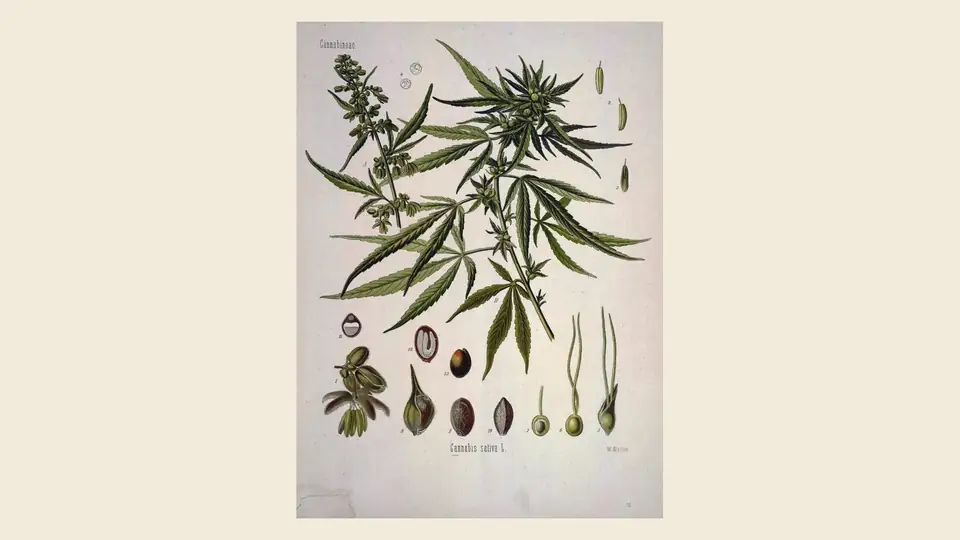
Green Crack is a sativa-leaning cultivar from the Skunk #1 line, credited to a breeder known as Cecil C., who reportedly called it Cush. The louder name is usually attributed to Snoop Dogg, and many sellers now list it as Green Cush. It smells of mango, citrus and skunk, and lab reports usually lead with myrcene, as of October 3, 2026.
| Specimen label | Green Crack |
|---|---|
| Lineage | Skunk #1 × an undocumented indica (often given as Afghani) |
| Breeder | Credited to Cecil C.; we found no breeder page or seed release from him |
| Other names | Cush, Green Cush |
| Sold as | Sativa or sativa-dominant |
| Nose | Ripe mango, orange and lemon peel, skunk, earth |
| Lead terpenes, as commonly reported | Myrcene, then caryophyllene and pinene |
| Cup record | Third place, Best Sativa, Denver High Times Cannabis Cup 2015, per Weedmaps |
A name it did not choose
The story that every strain database repeats goes like this. A grower known as Cecil C. bred the plant and called it Cush. Snoop Dogg smoked it, found it fast and electric, and called it Green Crack. Weedmaps puts it carefully: the strain “was reportedly named Cush by its original breeder, Cecil C., then renamed Green Crack by Snoop Dogg.” We have not found an interview or recording in which either man tells it first-hand, so treat it as cannabis lore with a long paper trail rather than a documented event.
The name has been uncomfortable for years. It borrows from a drug epidemic that hit Black neighborhoods hardest, and it sits badly next to an industry trying to be taken seriously. Leafly notes that “some people have taken to calling this strain Cush (with a ‘C’) or Green Cush instead.” On a menu, Green Crack, Green Cush and Cush should all mean the same cultivar. We use the name readers search for, and say so.
Where it comes from
Where Cecil C. grew it is not recorded in the sources we checked, and the lineage is just as thin. Leafly gives “Skunk #1 with an unknown indica.” Weedmaps names “a 1989 Super Sativa Seed Club, a Skunk #1, and an Afghani landrace.” Both agree on Skunk #1, the 1970s workhorse that sits behind a large share of later hybrids, from Super Skunk to Super Silver Haze. The indica parent is not recorded anywhere we trust.
What makes Green Crack unusual is its shape. It is sold as a sativa, yet its plants are compact and quick by sativa standards, and Leafly lists flowering at 7–9 weeks. That points to a strong indica contribution, whatever it was.
The nose
Open a good jar and the first word is fruit: soft, ripe mango, then orange and lemon peel. Under it sits a clear skunk note and damp earth. The smoke is lighter than the smell suggests, sweet on the inhale and a little tart after. Poorly cured lots lose the mango quickly and read as plain skunk.
Terpenes, as commonly reported
| Terpene | Usual rank | What it adds |
|---|---|---|
| Myrcene | First | The mango and the earthy body |
| Beta-caryophyllene | Second | Pepper, a dry finish |
| Pinene | Third | Pine and a sharper top note |
| Limonene, ocimene | Supporting | Citrus peel, a sweet green edge |
The order follows Leafly’s profile and published lab menus, not a single Batch. Green Crack is a useful reminder that “myrcene-dominant” does not mean sleepy-smelling. Myrcene is one of the most common lead terpenes in US flower, and here it reads as tropical fruit rather than hay. Our terpene guide covers why the same compound smells different in different company.
What people report feeling
Green Crack has one of the most consistent reputations in the trade. In Leafly’s tally of user reports, “energetic”, “focused” and “talkative” lead, and Weedmaps’ reports skew almost entirely toward energetic. People describe a quick, alert lift that suits the daytime and errands. Leafly’s most reported negatives are feeling anxious, dry mouth and paranoia, mostly at higher amounts.
These are reports from users, not measured effects. Dose, tolerance and setting shape them. Not medical advice; not evaluated by the FDA.
Growing notes
Growers describe a plant that is easier than its sativa label suggests: medium height, fast to finish and generous. Leafly’s grow notes ask for “excellent air circulation” and temperatures of 70–80°F, since the dense, sticky colas can hold moisture late in flower. Several phenotypes circulate. Some lean to bright citrus, others to heavier skunk.
Reading a Green Crack COA
- Accept all three names. A report issued to “Green Cush” or “Cush” is a normal Green Crack COA.
- Expect myrcene at or near the top. A lot led strongly by terpinolene is more likely a Haze-type cultivar sold under the name.
- Watch the total terpenes line. The mango is the first thing to fade. A low total terpene figure next to a high THCA figure often means an older or warm-cured lot.
- Run the total THC sum. A lot at 19% THCA and 0.12% delta-9 THC carries about 16.8% total THC (19 × 0.877 = 16.66, plus 0.12).
Similar strains on THCA Life
- Durban Poison, a cleaner, anise-led daytime sativa
- Jack Herer, pine and citrus peel from a terpinolene lead
- Sour Diesel, the fuel-forward energetic classic
Green Crack under the new rule
OCTOBER 3, 2026 — Federal hemp law currently tests flower for delta-9 THC alone, at 0.3% by dry weight (7 U.S.C. §1639o), which is why high-THCA Green Crack can be sold in the hemp-retail lane. On December 11, 2026, a total-THC definition that counts THCA takes effect for naturally occurring cannabinoids, after H.R. 6500 set that date when it was signed on September 2 (CRS In Focus IF13136). The example lot above, at 16.8% total THC, would be about 56 times the new limit. State-licensed dispensaries keep selling under state law. Some states already exclude THCA flower from hemp sales.
Filed by the desk. Not legal advice.
Sources
- Leafly, Green Crack strain profile (accessed October 3, 2026). leafly.com
- Weedmaps, Green Crack strain profile (accessed October 3, 2026). weedmaps.com
- 7 U.S.C. §1639o. law.cornell.edu
- H.R. 6500, 119th Congress. congress.gov
- Congressional Research Service, In Focus IF13136, August 17, 2026. everycrsreport.com
How we wrote this: the naming account from the cited databases, flagged where it is unverified; terpene ranks from published profiles; effects summarized from public user reports. Last reviewed October 3, 2026.
The federal hemp rule · December 11, 2026On December 11, 2026 the federal definition of hemp starts counting THCA toward the 0.3% total-THC limit, and flower like most of this shelf will no longer qualify. Until then it is sold as hemp, and this note will be rewritten the day the rule takes effect.Filed by the desk.
Questions
Who named Green Crack?
The usual account is that its breeder, Cecil C., called it Cush, and that Snoop Dogg renamed it Green Crack for its fast, energetic effect. The story is widely repeated, including by Weedmaps, but we have not found a first-hand source for it.
Why do some menus call it Green Cush?
Because many sellers and readers dislike a name that borrows from a drug epidemic. Leafly notes that some people call it Cush or Green Cush instead. It is the same cultivar.
What is Green Crack a cross of?
It is usually traced to Skunk #1. Leafly gives Skunk #1 crossed with an unknown indica; Weedmaps gives a 1989 Super Sativa Seed Club Skunk #1 and an Afghani landrace. The second parent is not documented.
What does Green Crack smell like?
Ripe mango and citrus peel over a skunky, earthy base. Myrcene is the terpene most often reported first, with caryophyllene and pinene behind it.
How we wrote this. Set down by THCA Life editorial desk for THCA Life. Every change is dated above. Corrections are welcome at hello@thcalife.com.