Purple Haze, more song than strain?
A name from a 1967 single, a cross nobody signed, and a jar that is green more often than purple. What Purple Haze can and cannot promise.
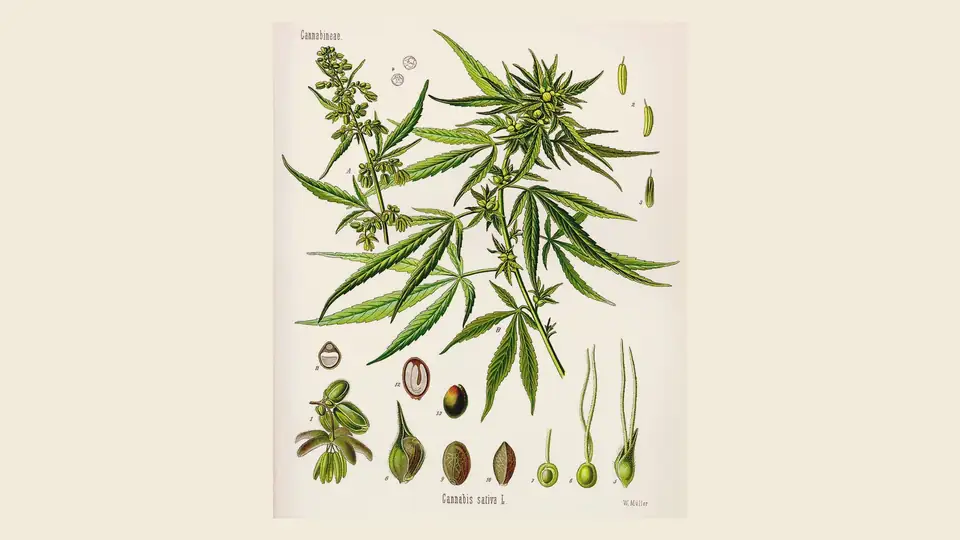
As of October 13, 2026, Purple Haze is listed as a sativa, usually traced to Purple Thai crossed with Haze, though no breeder documented that cross. Leafly lists its THC at 16%; AllBud’s description gives 14–19%. Myrcene, caryophyllene and limonene lead Leafly’s terpene data, and its reviewers most often report feeling creative, euphoric and giggly.
At a glance
| At a glance | Purple Haze |
|---|---|
| Type | Sativa (Leafly); sativa-dominant hybrid (AllBud) |
| Lineage | Purple Thai × Haze, as commonly listed. Disputed: no breeder, seed company or year of record |
| The name | Shared with “Purple Haze”, the Jimi Hendrix Experience single of 1967 |
| Reported THC | 16% typical (Leafly); 14–19% (AllBud’s description; its summary box says 26%) |
| Commonly reported terpenes | Myrcene, caryophyllene, limonene (Leafly); Haze-leaning lots often read terpinolene first |
| Commonly reported effects | Creative, euphoric, giggly (Leafly user reviews) |
| Nose | Sweet berry and grape skin, damp earth, incense and pepper from the Haze side |
| Our lots | No lab values posted for any Batch on our menu yet; the COA is sent on request |
| Total THC | THCA × 0.877 + delta-9 THC |
Type, THC, terpene and effect lines come from Leafly’s Purple Haze entry and AllBud’s Purple Haze entry, read on October 13, 2026. Leafly says its terpene data comes from products tested in labs it certifies, and its effects come from user reviews. These figures describe the strain name, not one lot. They are not test results for our flower.
Is Purple Haze named after the Jimi Hendrix song?
Most strain names start in a garden. This one started on a record. The Jimi Hendrix Experience released “Purple Haze” in 1967, and the phrase was everywhere long before anyone wrote it on a bag of flower. In an interview on January 28, 1967, Hendrix said the lyric came from a dream about walking under the sea (song history). Fans and the press read drugs into it. Hendrix and the people closest to him never tied the song to drugs, and Chas Chandler, his manager and producer, denied that Hendrix wrote it under the influence.
Growers borrowed the name later, and a lineage arrived with it: a purple Thai sativa crossed with Haze. We could find no breeder’s account, seed catalog or dated record behind that cross. Some growers argue that “Purple Haze” was never one fixed cross at all, but a name hung on any Haze plant that colored up in a cold autumn. Neither account can be checked, so on this page the lineage is marked disputed.
What does the Haze side bring?
Haze itself is better documented. As growers’ accounts tell it, the line was put together in Santa Cruz, California, in the late 1960s and 1970s from tropical sativa stock, then carried to the Netherlands, where Dutch seed houses worked it into the hybrids that followed. Haze plants are tall, slow and spicy. They stretch hard in flower, set long, airy colas, and often need well over 10 weeks to finish indoors.
That family runs through the THCA Life archive. Jack Herer is a Haze hybrid, and so, on one side, is Blue Dream. If a jar of Purple Haze smells of incense, pepper and pine more than fruit, the Haze is doing the talking.
Is Purple Haze always purple?
The color is in the name, and often not in the jar. Purple calyxes come from anthocyanins, the pigments behind blueberries and red cabbage. We covered how they work, and how cool nights bring them out, in our Granddaddy Purple profile. The difference is this: in GDP the color has a known source, Purple Urkle. In Purple Haze nobody can name the purple parent with certainty, so a green Purple Haze is not proof of a fake, and a violet one is not proof of the real thing. In neither strain does color tell you anything about potency.
What THC percentage does Purple Haze have?
Leafly lists Purple Haze at 16% THC, and AllBud gives 14–19% in its description (its summary box says 26%). Both describe the strain name rather than any one lot, and a single lot can land well above or below them.
A hemp-lane lab report lists THCA and delta-9 THC separately. Total THC is THCA × 0.877 plus delta-9 THC, so a lot at 22% THCA and 0.2% delta-9 THC carries about 19.5% total THC. No lab values are posted for any Batch on our menu yet, so we print no THC figure here; the COA is sent on request.
What does Purple Haze smell like, and which terpenes lead?
Good Purple Haze opens with sweet berry and something like grape skin, then a damp, earthy middle. Breaking a bud releases the Haze: incense, black pepper, a little pine.
On lab reports, the name does not hold together the way Blue Dream’s does. In the largest study of US flower chemistry, Smith and colleagues (PLOS ONE, 2022) sorted 89,923 samples into three main terpene groups, one led by terpinolene and two in which myrcene is prominent. The name Purple Haze does not pin a lot to one group. Lots sold under it are commonly reported as either terpinolene-led, like other Haze descendants, or myrcene-led, and that split is the most useful thing to know before buying.
| Pattern | Lead terpene | What the jar smells like |
|---|---|---|
| Haze-leaning | Terpinolene | Pine, fresh herbs, incense, a floral lift |
| Berry-leaning | Myrcene | Ripe berry, earth, musk |
| Either | Beta-caryophyllene | Black pepper on the exhale |
| Either | Ocimene, pinene, limonene | Green, sweet and citrus edges |
These patterns describe how lots sold as Purple Haze are commonly reported, not one Batch, and a single certificate of analysis (COA) can differ.
What effects do people report from Purple Haze?
In public reviews the words that recur are “euphoric”, “creative”, “talkative” and “heady”. Many describe a quick lift that stays in the head rather than the body, and it has a long-standing reputation as a daytime strain. On Leafly, the effects reviewers report most often are creative, euphoric and giggly; AllBud lists euphoria and sociable. AllBud also lists medical conditions. We leave those out, because user reviews are not evidence that a strain treats anything.
Those are reports, not measurements, and a famous name shapes expectation more than most people admit. Not medical advice; not evaluated by the FDA.
Why do Purple Haze plants vary so much?
Seed versions of Purple Haze sold today come from several companies and are not the same cross. Expect a wide spread. Haze-dominant plants stretch to two or three times their size in flower and take longer to finish; berry-leaning plants are shorter, denser and quicker. Purple shows only in phenotypes that carry the pigment, and mostly after cool nights near harvest. A grower chasing color can harvest the plant before the terpenes peak, which is one reason violet Purple Haze sometimes smells faint.
What should you check on a Purple Haze COA?
- A terpene panel at all. Without one you cannot tell which Purple Haze you are holding.
- Which terpene leads. Terpinolene first means the Haze side; myrcene first means the berry side. Neither is wrong. Buy the one you want.
- The test date. Terpinolene is volatile and fades with time, so an old report can flatter an old jar.
- The total THC line, computed as in the table above, rather than THCA alone.
- Nothing about color. No lab line measures purple, and none should change the price.
What does December 11 change for Purple Haze THCA flower?
OCTOBER 3, 2026 — Hemp-lane THCA flower is defined today by delta-9 THC alone, at 0.3% or less before heating, under 7 U.S.C. §1639o. Under P.L. 119-37, the federal definition will count THCA too, at 0.3% total THC by dry weight (CRS In Focus IF13136). H.R. 6500, signed September 2, 2026, set that change for naturally occurring cannabinoids at December 11, 2026, so from that date high-THCA flower stops being hemp federally unless Congress acts again. Many states already exclude high-THCA flower from their hemp lane, so it is not legal everywhere now.
Filed by the desk. Not legal advice.
Which strains are similar to Purple Haze?
- Jack Herer: the best-documented Haze hybrid in our archive, and terpinolene-led.
- Durban Poison: a sativa landrace with the same herbal, terpinolene-heavy nose.
- Blue Dream: Haze on one side, berry on the other, and far more consistent on lab reports.
- Granddaddy Purple: purple with a known source, and an indica.
Sources
- Leafly, “Purple Haze” strain entry, read October 13, 2026. leafly.com
- AllBud, “Purple Haze” strain entry, read October 13, 2026. allbud.com
- Smith, Vergara, Keegan and Jikomes, “The phytochemical diversity of commercial Cannabis in the United States,” PLOS ONE, 2022. doi.org/10.1371/journal.pone.0267498
- “Purple Haze,” Wikipedia article on the song: release and interview history. en.wikipedia.org
- 7 U.S.C. §1639o. law.cornell.edu
- H.R. 6500, 119th Congress. congress.gov
- Congressional Research Service, In Focus IF13136, August 17, 2026. everycrsreport.com
How we wrote this: type, THC figures, leading terpene names and top effects in the At a glance table from Leafly and AllBud; lineage from growers’ published accounts, labelled disputed where no breeder of record exists; terpene patterns from published lab menus and the cited study; effects summarized from public user reports. Last reviewed October 13, 2026.
The federal hemp rule · December 11, 2026On December 11, 2026 the federal definition of hemp starts counting THCA toward the 0.3% total-THC limit, and flower like most of this shelf will no longer qualify. Until then it is sold as hemp, and this note will be rewritten the day the rule takes effect.Filed by the desk.
Questions
What THC percentage does Purple Haze have?
Leafly lists Purple Haze at 16% THC and AllBud gives 14–19% in its description (its summary box says 26%). These are figures for the strain name, not test results for any one lot. On hemp-lane flower, total THC is THCA × 0.877 plus delta-9 THC.
What is Purple Haze a cross of?
It is most often listed as Purple Thai crossed with Haze. No breeder, seed company or year is attached to that cross in any primary account, so treat the lineage as disputed.
Is the Purple Haze strain named after the Jimi Hendrix song?
Most likely the name came from the song, which the Jimi Hendrix Experience released in 1967. Growers adopted it later; Hendrix himself said the lyric came from a dream.
Is Purple Haze always purple?
No. Many lots sold as Purple Haze are green. Color depends on genetics and on cool nights before harvest, and it says nothing about potency.
What terpenes does Purple Haze have?
It varies by cut. Lots that lean toward the Haze side tend to read terpinolene first, while berry-leaning lots read myrcene first. Caryophyllene usually sits behind either one.
What effects do people report from Purple Haze?
Leafly reviewers most often report feeling creative, euphoric and giggly, and AllBud lists euphoria and sociable. These are user reports, shaped by dose, tolerance and setting, not measurements or medical claims.
How we wrote this. Set down by THCA Life editorial desk for THCA Life. Every change is dated above. Corrections are welcome at hello@thcalife.com.