Strawberry Cough, and where the berry comes from
A clone from a Connecticut basement, a grower who gave it away, and a berry smell no single terpene explains. Strawberry, herbs and a dry Haze spice.
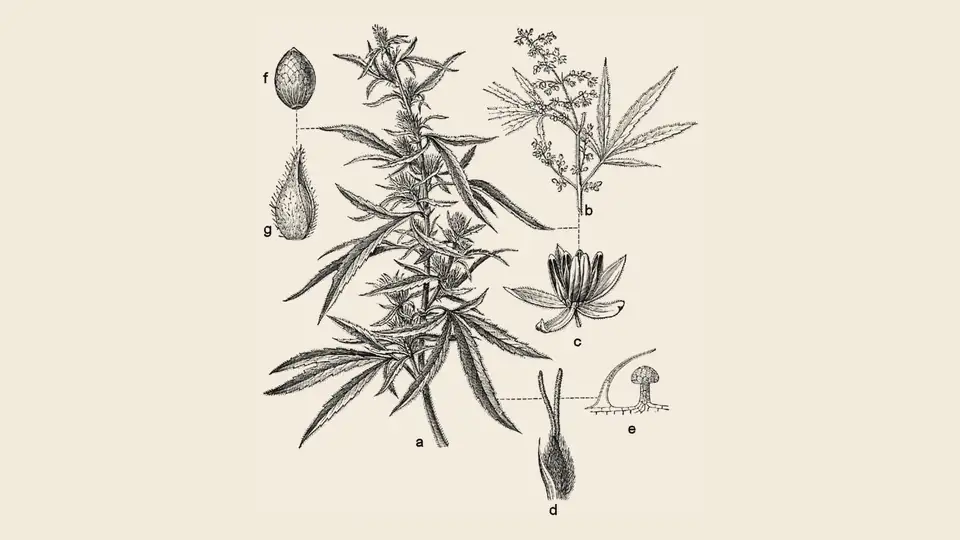
Strawberry Cough is a sativa-leaning hybrid most often given as Strawberry Fields × Haze, popularized in the US by grower Kyle Kushman after he was handed a clone in Connecticut. Its true breeder is disputed. It smells of fresh strawberry over herbs and Haze spice, and lab reports usually lead with myrcene, as of October 3, 2026.
| Specimen label | Strawberry Cough |
|---|---|
| Lineage | Strawberry Fields × Haze, as commonly reported; not documented |
| Breeder | Unknown; popularized by Kyle Kushman |
| Sold as | Sativa-dominant hybrid |
| Nose | Ripe strawberry, sweet berry, fresh herbs, pine, a dry spice |
| Lead terpenes, as commonly reported | Myrcene, then pinene and caryophyllene |
| The name | Strawberry for the nose, cough for the smoke |
A clone with no paperwork
Strawberry Cough is a good test of how a strain history should be written, because most of it is unknown. The best-documented part is how it spread. In Kushman’s own telling, as Weedmaps recounts it, “a novice Connecticut grower handed him a tiny clone from a basement garden.” Kushman, a former cultivation editor at High Times, passed it around New York “rather than guarding it like proprietary gold,” then took the clone with him when he moved west.
That makes Kushman the strain’s best-known champion, not demonstrably its breeder. Weedmaps says plainly that “its original breeder and exact pedigree remain disputed.” Leafly describes “mysterious genetic origins” and offers Haze × Strawberry Fields as what the strain is “thought to be.” Several seed companies now sell their own Strawberry Cough lines, and those are separate selections that share a name.
So when a menu says “bred by Kyle Kushman”, read it as shorthand. When it prints the Strawberry Fields × Haze cross as fact, read it as the accepted guess.
Where the berry comes from
The strawberry is the reason anyone searches for this strain, and it is also the hardest part to explain. No common cannabis terpene smells of strawberry by itself. Myrcene is earthy and fruity, pinene is pine, caryophyllene is pepper. The berry impression comes from how they combine with much smaller amounts of other compounds.
Research is starting to name those compounds. A 2023 study by Oswald and colleagues in ACS Omega is titled, bluntly, “Minor, Nonterpenoid Volatile Compounds Drive the Aroma Differences of Exotic Cannabis.” In other words, the terpene panel on a COA tells you a lot about a strain’s broad family and less about its signature fruit note. Two practical results follow:
- Terpenes predict the family, not the fruit. A myrcene-pinene profile fits Strawberry Cough, but it fits many non-berry strains too.
- The berry is fragile. Trace volatiles are among the first things lost to heat, air and time. A Strawberry Cough that smells of hay and pepper has often just been stored badly.
The nose and the cough
A fresh jar smells of ripe strawberry and sweet berry, then herbs and pine, with a dry, spicy Haze note on the grind. The smoke is lighter in flavor than the jar and is known for an expansive quality; Weedmaps notes it “can bring on the cough responsible for the other half of the name.”
Terpenes, as commonly reported
| Terpene | Usual rank | What it adds |
|---|---|---|
| Myrcene | First | Soft fruit and an earthy base |
| Alpha-pinene | Second | Pine, a fresh lift |
| Beta-caryophyllene | Third | Pepper and the Haze-like dryness |
| Limonene, terpinolene | Supporting, variable | Citrus or a floral-herbal note in some cuts |
The ranking follows Leafly’s profile and published lab menus, not one Batch. Because several unrelated lines share the name, Strawberry Cough reports vary more than most. For background on reading these panels, see terpenes in THCA flower.
What people report feeling
User reports on Leafly lead with “uplifted”, “energetic” and “happy”, and Weedmaps’ summary describes “a clear, energetic cerebral high” with a social streak. People commonly call it a daytime strain. The most common complaints are dry mouth, dry eyes and, for some, an anxious edge.
These are reports from users, not measured effects. Dose, tolerance and setting shape them. Not medical advice; not evaluated by the FDA.
Growing notes
Weedmaps reports a fairly bushy plant of medium height with average yields of large buds, flowering in 63–70 days; Leafly lists 7–9 weeks. Either figure is short for a Haze cross, which fits the idea of a faster-finishing second parent. The berry is strongest with a slow, cool dry; growers who rush it lose the very thing the name promises.
Reading a Strawberry Cough COA
- Expect a myrcene or pinene lead. A terpinolene-dominant report is possible in some seed lines, but it is a different expression from the classic clone.
- Look at total terpenes and the test date together. A strong berry nose and a recent test date usually agree. An old test on a quiet-smelling lot tells you why.
- Do the total THC math. At 20% THCA and 0.18% delta-9 THC, a lot carries about 17.7% total THC (20 × 0.877 = 17.54, plus 0.18).
- Ask which line. A seed-company Strawberry Cough and the East Coast clone may share a name and little else.
Similar strains on THCA Life
- Jack Herer, for the Haze spice with pine instead of berry
- Blue Dream, a softer, berry-sweet daytime hybrid
- Durban Poison, a bright sativa with a licorice nose
A note on the law
OCTOBER 3, 2026 — Strawberry Cough sold as THCA flower through hemp retail is lawful federally today only because the hemp test in 7 U.S.C. §1639o looks at delta-9 THC, not THCA. That changes on December 11, 2026. P.L. 119-37 redefined hemp by total THC, THCA included, at 0.3% by dry weight, and H.R. 6500, signed September 2, 2026, fixed that date for plant-derived cannabinoids (CRS In Focus IF13136). After it, high-THCA flower is federally marijuana. Dispensaries licensed in adult-use states are not affected. State hemp rules already differ, and THCA flower is not legal at hemp retail everywhere.
Filed by the desk. Not legal advice.
Sources
- Weedmaps, Strawberry Cough strain profile (accessed October 3, 2026). weedmaps.com
- Leafly, Strawberry Cough strain profile (accessed October 3, 2026). leafly.com
- Oswald and others, “Minor, Nonterpenoid Volatile Compounds Drive the Aroma Differences of Exotic Cannabis,” ACS Omega, 2023. doi.org/10.1021/acsomega.3c04496
- 7 U.S.C. §1639o; H.R. 6500; CRS In Focus IF13136, August 17, 2026.
How we wrote this: origin from the cited profiles, with disputed points marked; aroma chemistry from the cited study; effects summarized from public user reports. Last reviewed October 3, 2026.
The federal hemp rule · December 11, 2026On December 11, 2026 the federal definition of hemp starts counting THCA toward the 0.3% total-THC limit, and flower like most of this shelf will no longer qualify. Until then it is sold as hemp, and this note will be rewritten the day the rule takes effect.Filed by the desk.
Questions
Who created Strawberry Cough?
Nobody knows for certain. Kyle Kushman, the former High Times cultivation editor, is credited with spreading it after a grower in Connecticut gave him a clone. Its original breeder and exact pedigree are disputed.
What is Strawberry Cough a cross of?
It is commonly reported as Strawberry Fields crossed with a Haze. Leafly calls this a likely cross and describes the strain's origins as mysterious.
Why does Strawberry Cough smell like strawberries?
No single terpene smells of strawberry. The berry note comes from a blend of compounds, and recent research suggests minor non-terpene volatiles do much of the work in fruity cultivars. That is also why a poorly stored lot loses the berry first.
Why is it called Strawberry Cough?
Strawberry for the smell, and cough for a smoke known for its expansive, throat-catching quality.
How we wrote this. Set down by THCA Life editorial desk for THCA Life. Every change is dated above. Corrections are welcome at hello@thcalife.com.